Showing posts with label genealogy. Show all posts

Sunday, October 18, 2020

New Website and Social Media alert!!

 So I started a thing...


I started my own Genealogy and Family History resource website.  It is a place for people to go and get lots of tips and tricks and ideas. It talks about different research resources you can use, how to get involved, and different aspects of family history that is more than just filling in the names and dates on a pedigree chart.  I decided to call it "preserve your tree", because in doing your family history and genealogy, you are preserving your family tree for generations to come. It really is about finding out who your ancestors were as a whole person, and not just a name and date on a chart. It's about immersing yourself in their life and history to help you discover where you came from and how that has shaped you as a person!  I did a website, an Instagram and a facebook group.

The website is called Preserve Your Tree

Instagram:  Preserveyourtree

Facebook Group (Public)  Preserve Your Tree.


WHY???

I have been doing family history and genealogy for 35 years. It started when I was young and we had a little class on it in my girls church group.  We had to complete a 4 generation Pedigree chart, and it set something off in my brain.  I remember having my mom help me and she pulled out some letters from her cousin that talked about her side of the family, and pulled out the genealogy folder from my aunt that talked about my dads side of the family, and we went through and started plugging names in.  I remember thinking just how cool it was. It only went back 4 generations, but thats when I got the bug!  I consulted with my best friend who was also doing the chart, and she said that her parents were able to get all the way back to the 1500s.  I was so jealous I couldn't see straight.  I couldn't get back that far, and boy did I want to! 

I remember being a young teenager, when we went to Tennessee and visited the area where my moms relatives had settled. We went to the large library and sat and scrolled through microfilm, looking through the C.S.A records, and census records and just ANYTHING we could get our hands on to try and find SOMEONE!   I remember as a young married woman, going to the main library in Cincinnati with my mother in law and scrolling through hours of microfilm, again just hoping to find SOMETHING on some of my more elusive ancestors.  I remember taking my mother in law to a local church and cemetery in North Carolina because she knew from land records thats where her great great grandfather had settled during the revolutionary war.  We went into the church building and there were a few gentlemen there who were genealogy consultants for that church and the one man and my mother in law had ancestors that had dealings with each other and possibly cousin connections!   I remember going on to ancestry and family search and putting in my great grandmothers name HOPING for ANYTHINGG, and seeing that green leaf pop up and opening up and there was the census record with her on it. The census record I had never been able to find!  I found her mother and father and their death records!  I found military records and things I never dreamed of being able to find.

I remember doing research on my German side and finding an address on a certificate of my ancestor.  I looked it up and there was a photo of his bakery and house!  I was also able to find a picture of him, and as the photo uploaded I felt almost this sense of relief, and I thought I heard a whisper say "you found me!".  I thought "my dad has his eyes"! 

I also remember back in the day of PAF files and Gedcom software merging my husbands genealogy records with mine and we did a duplicates search.  I remember that sense of dread when we both had a Mary Jane Smith as one of our direct great grandparents, and I just KNEW that somehow I had married my cousin, ad that whole southern stereotype was true!! Not to worry,  turns out they were NOT the same woman, just had the same name. PHEW! 

I started indexing so I could help others have the records online and be able to experience the joys of doing genealogy.

I have kept up with genealogy and I have watched people make mistakes. I have felt the frustration in my research, I have hit the brick walls.  But I have also had the breakthroughs, and  I love it.   I want to help others to love it and be part of the fastest growing hobby! 

So head on over and check it out, follow me on IG and join the FB group!  I would love to help you get the most out of your research as possible!!


Tuesday, October 13, 2020

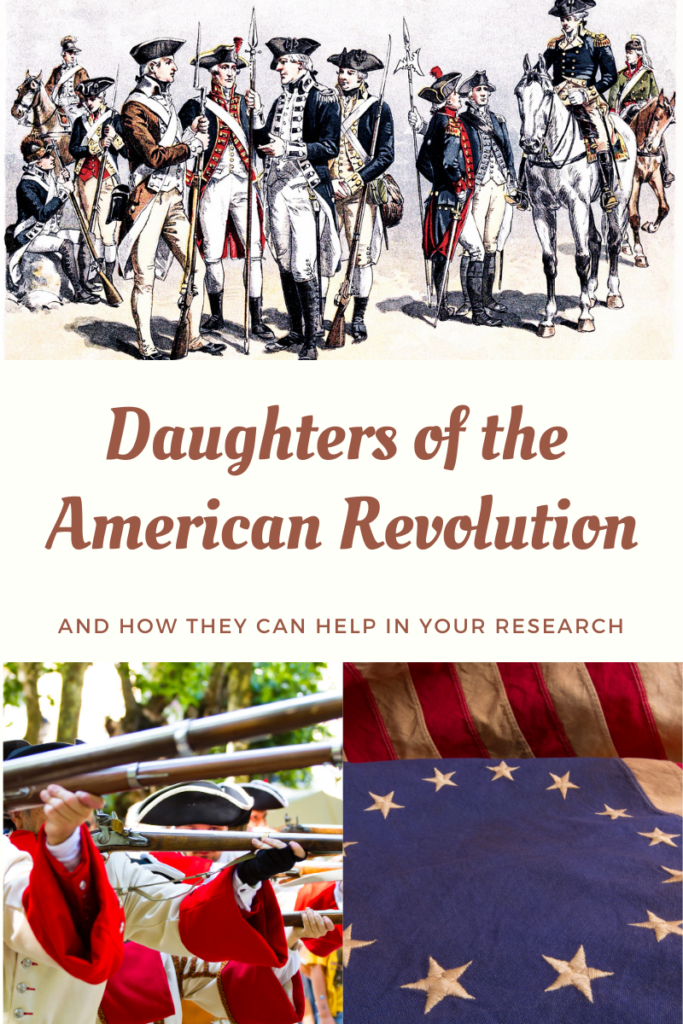
HOW TO USE THE DAR LIBRARY IN YOUR GENEALOGY RESEARCH

 This is a post taken from my website Preserve Your Tree. check it out for more genealogy articles , tips and ideas.

Preserve Your Tree is in no way affiliated with DAR. This post was made for the express intent of showing research resources, and is not a paid post nor endorsement.

The Daughters of the American Revolution (DAR as they are often called) is one of the most well known historical lineage societies in the United States. The DAR is a lineage based service organization for women who are directly descended from a person involved in the American Revolutionary War.

FROM WIKIPEDA "A non-profit group, they promote historic preservation, education, and patriotism. The organization's membership is limited to direct lineal descendants of soldiers or others of the Revolutionary period who aided the cause of independence; applicants must have reached 18 years of age and are reviewed at the chapter level for admission. The DAR has over 185,000 current members in the United States and other countries. 

DAR was founded in 1890 as an offshoot to the Sons of the American Revolution (after the SAR refused womens entry to their society), and since then has had over a million members ! There are currently over 3000 local chapters of DAR, each chapter focusing on charity work and educational causes in line with DAR objectives of historical preservation, education and patriotism.

HOW CAN DAR HELP YOU IN YOUR GENEALOGY RESEARCH?

DAR has access to early American genealogy resources, and their Genealogical Research System (GRS) includes free online databases containing information on Revolutionary patriot ancestors, descendants of those patriots, as well as the vast array of genealogical resources from the DAR Library. The GRS provide access to the materials that DAR has amassed since 1890.

While you can find many of the records online (and more is coming online on a regular basis), most of them are available only at the DAR’s Library, located in Washington D.C. The Library is free to use and open to the general public Monday through Saturday. (AS OF OCT 2020 THE LIBRARY IS CURRENTLY CLOSED DUE TO COVID SHUTDOWNS AND WILL REOPEN IN PHASED ACCORDANCE TO DISTRICT OF COLUMBIA GUIDELINES) What if your ancestors weren't part of the American Revolution? A visit to the library is definitely worth your time thanks to the valuable information from collections and databases it provides to the public.

WHAT TYPE OF RECORDS CAN YOU FIND THROUGH DAR TO HELP IN YOUR RESEARCH?

"The DAR Genealogical Records Committee Reports comprise one of the most unique parts of the DAR Library’s holdings.  This 20,000+ volume set includes a wide variety of content including transcriptions of local probate, court and land records; Bible records; cemetery transcriptions; family genealogies and lineages; Revolutionary War service; and other genealogically significant types of records."

For more information on DAR , their library and databases, visit their website at www.dar.org

Monday, October 5, 2020

FAMILY HISTORY MONTH: BIGGEST PITFALLS AND TRAPS BEGINNERS FACE


 When you are starting out in your family history research there are lots of mistakes and traps we can fall into.  When I first started doing genealogy I KNOW I was guilty of just about all of these. But the more I worked on it, talked to others, and did more research I found ways to help avoid some of these pitfalls.

I reached out to several people who are accomplished genealogists and historians. Here is some of their advice.

Barb Williams is a genealogy researcher who loves the head- bang- against- the- wall challenges that comes with the territory.!  She is skilled at research and finding those people that were seemingly impossible to find.  In reaching out to Barb, she gave me her top tips to avoid the common rookie mistakes.

#1 biggest mistake is believing other peoples trees without verifying their sources and citations! Worse yet, believing uncited and unsourced information. Ancestry is great, but there are a lot of amateurs who have gone down rabbit holes, posted it, and it has multiplied and morphed into fact!  TAKE AWAYSource and cite your work!! Do not take unsourced and uncited information from others as fact.

#2 mistake, getting so caught up in the chase (filling in the blanks on the pedigree chart) that the ancestor moment gets forgotten. Dig into the person- find out their occupation, their faith, their community involvement etc. It paints such a better picture than BCMD info (birth, christening , marriage, death).  TAKE AWAY:   Learn about the person.  Family history is more than just filling in the blanks. Discover the person behind the name

#3 mistake, not knowing the history of the towns your people lived in, Family and friends (remember that friends frequently became future in-laws!) traveled to and settled in towns together. Many times the neighbors shown in censuses have helped me break the brick walls, especially in extreme rural areas. Also, knowing the faith of your people is important because people naturally want to cluster with like minded folk. You needn't be looking for an Irish Catholic in a German Protestant area!  TAKE AWAY:  Understand the demographics of an area and people,  and know the history to help determine if you are heading the right direction!


Diane  is a Family History missionary for the Church of Jesus Christ of Latter Day Saints, and helps people with the family search website. The biggest mistake she sees is people who don't bother to clean up the record of the person they are doing research for.  (making sure they have the correct information and that no children have been missed etc) This results in a lot of duplications and errors.  Other people find a name and plug it in without checking to make sure it really is their relative. There are dozens of Mary Margaret's and Margaret Mary's with the same last name in the same country.  CHECK YOUR SPECS  and think before you add or delete anyone. She also goes on to say Don't assume someone is a relative unless you have a source to back up an assumption


The site familysearch.org is a great resource and genealogy website.  under the help section They had an article that listed the  most common Rookie Mistakes. Here are a few of them and how to avoid the rookie mistake pitfalls!!

1. Dont just research individuals.  It is easy to get  singularly focused on one person to the exclusion of other family members, family dynamics, locality and cultural influences. SO you may be able to fill in the blanks with a name and dates, you are missing out on so much more.  Buy using all the information available you create a much broader picture and many times will be able to break through a brick wall moment.

2. Poor research notes. Meager source citations, and overabundance of information without really knowing how to organize it. This can create a snowball effect as more information is gathered. Poor notes and organization often leads to frustration , redundant searches, missed documents and overlooked clues.    You need to learn to document as you go.  Keep up to date, well sourced footnotes and citations. Add records like census, military records, certificates etc in family group logs. You can use these records to also keep track of sources researched so far.

3. Jumping to Conclusions that arent supported by evidence.   example used on familysearch.org " Rookies are often too quick to draw conclusions without enough strong evidence. For example, when rookies find records for individuals with the same name, they may assume the records represent the same person when they do not. For instance, a census record showing William Bescoby born about 1811 in Lincolnshire, England, and a marriage record showing William Bescoby married in 1835 in Lincolnshire, England, can easily appear to be about the same person. Without doing additional research, a rookie may conclude these two records represent the same person. But further research in census and other records would have shown they do not."  The consequences of jumping to conclusions can be incorrect family tree, incorrect relationships,  merging of wrong individuals and time spent researching incorrect lines! Realize that multiple sources are really what is needed to draw valid conclusions .

4. Assuming spellings are correct.   Remember people are human and make mistakes.  Dont dismiss something because the spelling is wrong.  Remember census reporters may have misheard, or misspelled, or people indexing the records for digital upload may have made an error.  Upon immigration many families changed the spellings of their names to avoid discrimination.  If you go in refusing to accept the possibility of another spelling you may miss out on opportunities and clues and a missed opportunity to figure out why the changes took place. Keep an open mind and research variants!  I had relatives that came from germany and one line of that family changed over to the more americanized version (and frou frou fashionable according to them). 

5. Vague research goals:  Many mistakes are made because there are no firm research goals, or researcher may be rushed without the proper training tools.  Beginners often just want to find as many people as they can and start plugging in the BCMD info, and have no real group connections.   This is a marathon, not a sprint.  Dont try and do too much all at once, it isnt just about filling in the blanks. Experienced researchers focus on one event at a time. 

6. quitting their research if no records are found the first time around.   Here is the deal, you may not always find a record when you are looking.  But more and more records are being made available online every day! Years ago when trying to research my mothers side of the family we couldn't find anything! Getting past a great grandparent was almost impossible. You had to find the microfilms and just sit and scroll through hoping to find something.  I wanted to give up!  It seemed virtually impossible to find information on my great grandmother who lived in an extremely rural area of Tennessee . There was nothing.  But now all the info is available at the push of a button.  I looked again and found her marriage license.  On that license I found the name of her parents, and through that I found a census that had been indexed and uploaded. I found military records previously unknown, and newspaper articles supporting facts!  It is amazing what has happened in the past 20 years in the world of family history.  SO just because you cant find it now doesn't mean it wont be available in the future. Keep looking!!


I hope this has helped break down some of the biggest family history research traps and rookie mistakes and can help you get started with a rewarding research challenge!


Day trip from Boise- Hells Canyon and Dam , and Owyhee Reservoir

"Hells Canyon, North America's deepest rover gorge, encompasses a vastly remote region with dramatic changes in elevation, terrain,...